
BOOK XVIII - Le Morte D'Arthur
CHAPTER I
Of the joy King Arthur and the queen had of the achievement of the Sangreal; and how Launcelot fell to his old love again.
SO after the quest of the Sangreal was fulfilled, and all knights that were left alive were come again unto the Table Round, as the book of the Sangreal maketh mention, then was there great joy in the court; and in especial King Arthur and Queen Guenever made great joy of the remnant that were come home, and passing glad was the king and the queen of Sir Launcelot and of Sir Bors, for they had been passing long away in the quest of the Sangreal.
Then, as the book saith, Sir Launcelot began to resort unto Queen Guenever again, and forgat the promise and the perfection that he made in the quest. For, as the book saith, had not Sir Launcelot been in his privy thoughts and in his mind so set inwardly to the queen as he was in seeming outward to God, there had no knight passed him in the quest of the Sangreal; but ever his thoughts were privily on the queen, and so they loved together more hotter than they did to-forehand, and had such privy draughts together, that many in the court spake of it, and in especial Sir Agravaine, Sir Gawaine's brother, for he was ever open-mouthed.
So befell that Sir Launcelot had many resorts of ladies and damosels that daily resorted unto him, that besought him to be their champion, and in all such matters of right Sir Launcelot applied him daily to do for the pleasure of Our Lord, Jesu Christ. And ever as much as he might he withdrew him from the company and fellowship of Queen Guenever, for to eschew the slander and noise; wherefore the queen waxed wroth with Sir Launcelot. And upon a day she called Sir Launcelot unto her chamber, and said thus: Sir Launcelot, I see and feel daily that thy love beginneth to slake, for thou hast no joy to be in my presence, but ever thou art out of this court, and quarrels and matters thou hast nowadays for ladies and gentlewomen more than ever thou wert wont to have aforehand.
Ah madam, said Launcelot, in this ye must hold me excused for divers causes; one is, I was but late in the quest of the Sangreal; and I thank God of his great mercy, and never of my desert, that I saw in that my quest as much as ever saw any sinful man, and so was it told me. And if I had not had my privy thoughts to return to your love again as I do, I had seen as great mysteries as ever saw my son Galahad, outher Percivale, or Sir Bors; and therefore, madam, I was but late in that quest. Wit ye well, madam, it may not be yet lightly forgotten the high service in whom I did my diligent labour. Also, madam, wit ye well that there be many men speak of our love in this court, and have you and me greatly in await, as Sir Agravaine and Sir Mordred; and madam, wit ye well I dread them more for your sake than for any fear I have of them myself, for I may happen to escape and rid myself in a great need, where ye must abide all that will be said unto you. And then if that ye fall in any distress through wilful folly, then is there none other remedy or help but by me and my blood. And wit ye well, madam, the boldness of you and me will bring us to great shame and slander; and that were me loath to see you dishonoured. And that is the cause I take upon me more for to do for damosels and maidens than ever I did to-fore, that men should understand my joy and my delight is my pleasure to have ado for damosels and maidens.
CHAPTER II
ALL this while the queen stood still and let Sir Launcelot say what he would. And when he had all said she brast out a-weeping, and so she sobbed and wept a great while. And when she might speak she said: Launcelot, now I well understand that thou art a false recreant knight and a common lecher, and lovest and holdest other ladies, and by me thou hast disdain and scorn. For wit thou well, she said, now I understand thy falsehood, and therefore shall I never love thee no more. And never be thou so hardy to come in my sight; and right here I discharge thee this court, that thou never come within it; and I forfend thee my fellowship, and upon pain of thy head that thou see me no more. Right so Sir Launcelot departed with great heaviness, that unnethe he might sustain himself for great dole-making.
Then he called Sir Bors, Sir Ector de Maris, and Sir Lionel, and told them how the queen had forfended him the court, and so he was in will to depart into his own country. Fair sir, said Sir Bors de Ganis, ye shall not depart out of this land by mine advice. Ye must remember in what honour ye are renowned, and called the noblest knight of the world; and many great matters ye have in hand. And women in their hastiness will do ofttimes that sore repenteth them; and therefore by mine advice ye shall take your horse, and ride to the good hermitage here beside Windsor, that sometime was a good knight, his name is Sir Brasias, and there shall ye abide till I send you word of better tidings. Brother, said Sir Launcelot, wit ye well I am full loath to depart out of this realm, but the queen hath defended me so highly, that meseemeth she will never be my good lady as she hath been. Say ye never so, said Sir Bors, for many times or this time she hath been wroth with you, and after it she was the first that repented it. Ye say well, said Launcelot, for now will I do by your counsel, and take mine horse and my harness, and ride to the hermit Sir Brasias, and there will I repose me until I hear some manner of tidings from you; but, fair brother, I pray you get me the love of my lady, Queen Guenever, an ye may Sir, said Sir Bors, ye need not to move me of such matters, for well ye wot I will do what I may to please you.
And then the noble knight, Sir Launcelot, departed with right heavy cheer suddenly, that none earthly creature wist of him, nor where he was become, but Sir Bors. So when Sir Launcelot was departed, the queen outward made no manner of sorrow in showing to none of his blood nor to none other. But wit ye well, inwardly, as the book saith, she took great thought, but she bare it out with a proud countenance as though she felt nothing nor danger.
CHAPTER III
How at a dinner that the queen made there was a knight enpoisoned, which Sir Mador laid on the queen.
AND then the queen let make a privy dinner in London unto the knights of the Round Table. And all was for to show outward that she had as great joy in all other knights of the Table Round as she had in Sir Launcelot. All only at that dinner she had Sir Gawaine and his brethren, that is for to say Sir Agravaine, Sir Gaheris, Sir Gareth, and Sir Mordred. Also there was Sir Bors de Ganis, Sir Blamore de Ganis, Sir Bleoberis de Ganis, Sir Galihud, Sir Galihodin, Sir Ector de Maris, Sir Lionel, Sir Palomides, Safere his brother, Sir La Cote Male Taile, Sir Persant, Sir Ironside, Sir Brandiles, Sir Kay le Seneschal, Sir Mador de la Porte, Sir Patrise, a knight of Ireland, Aliduk, Sir Astamore, and Sir Pinel le Savage, the which was cousin to Sir Lamorak de Galis, the good knight that Sir Gawaine and his brethren slew by treason. And so these four-and-twenty knights should dine with the queen in a privy place by themself, and there was made a great feast of all manner of dainties.
But Sir Gawaine had a custom that he used daily at dinner and at supper, that he loved well all manner of fruit, and in especial apples and pears. And therefore whosomever dined or feasted Sir Gawaine would commonly purvey for good fruit for him, and so did the queen for to please Sir Gawaine; she let purvey for him all manner of fruit, for Sir Gawaine was a passing hot knight of nature. And this Pinel hated Sir Gawaine because of his kinsman Sir Lamorak de Galis; and therefore for pure envy and hate Sir Pinel enpoisoned certain apples for to enpoison Sir Gawaine. And so this was well unto the end of the meat; and so it befell by misfortune a good knight named Patrise, cousin unto Sir Mador de la Porte, to take a poisoned apple. And when he had eaten it he swelled so till he brast, and there Sir Patrise fell down suddenly dead among them.
Then every knight leapt from the board ashamed, and araged for wrath, nigh out of their wits. For they wist not what to say; considering Queen Guenever made the feast and dinner, they all had suspicion unto her. My lady, the queen, said Gawaine, wit ye well, madam, that this dinner was made for me, for all folks that know my condition understand that I love well fruit, and now I see well I had near been slain; therefore, madam, I dread me lest ye will be shamed. Then the queen stood still and was sore abashed, that she nist not what to say. This shall not so be ended, said Sir Mador de la Porte, for here have I lost a full noble knight of my blood; and therefore upon this shame and despite I will be revenged to the utterance. And there openly Sir Mador appealed the queen of the death of his cousin, Sir Patrise. Then stood they all still, that none would speak a word against him, for they all had great suspicion unto the queen because she let make that dinner. And the queen was so abashed that she could none other ways do, but wept so heartily that she fell in a swoon. With this noise and cry came to them King Arthur, and when he wist of that trouble he was a passing heavy man.
CHAPTER IV
How Sir Mador appeached the queen of treason, and there was no knight would fight for her at the first time.
AND ever Sir Mador stood still afore the king, and ever he appealed the queen of treason; for the custom was such that time that all manner of shameful death was called treason. Fair lords, said King Arthur, me repenteth of this trouble, but the case is so I may not have ado in this matter, for I must be a rightful judge; and that repenteth me that I may not do battle for my wife, for as I deem this deed came never by her. And therefore I suppose she shall not be all distained, but that some good knight shall put his body in jeopardy for my queen rather than she shall be brent in a wrong quarrel. And therefore, Sir Mador, be not so hasty, for it may happen she shall not be all friendless; and therefore desire thou thy day of battle, and she shall purvey her of some good knight that shall answer you, or else it were to me great shame, and to all my court.
My gracious lord, said Sir Mador, ye must hold me excused, for though ye be our king in that degree, ye are but a knight as we are, and ye are sworn unto knighthood as well as we; and therefore I beseech you that ye be not displeased, for there is none of the four-and-twenty knights that were bidden to this dinner but all they have great suspicion unto the queen. What say ye all, my lords? said Sir Mador. Then they answered by and by that they could not excuse the queen; for why she made the dinner, and either it must come by her or by her servants. Alas, said the queen, I made this dinner for a good intent, and never for none evil, so Almighty God me help in my right, as I was never purposed to do such evil deeds, and that I report me unto God.
My lord, the king, said Sir Mador, I require you as ye be a righteous king give me a day that I may have justice. Well, said the king, I give the day this day fifteen days that thou be ready armed on horseback in the meadow beside Westminster. And if it so fall that there be any knight to encounter with you, there mayst thou do the best, and God speed the right. And if it so fall that there be no knight at that day, then must my queen be burnt, and there she shall be ready to have her judgment. I am answered, said Sir Mador. And every knight went where it liked them.
So when the king and the queen were together the king asked the queen how this case befell. The queen answered: So God me help, I wot not how or in what manner. Where is Sir Launcelot? said King Arthur; an he were here he would not grudge to do battle for you. Sir, said the queen, I wot not where he is, but his brother and his kinsmen deem that he be not within this realm. That me repenteth, said King Arthur, for an he were here he would soon stint this strife. Then I will counsel you, said the king, and unto Sir Bors: That ye will do battle for her for Sir Launcelot's sake, and upon my life he will not refuse you. For well I see, said the king, that none of these four-and-twenty knights that were with you at your dinner where Sir Patrise was slain, that will do battle for you, nor none of them will say well of you, and that shall be a great slander for you in this court. Alas, said the queen, and I may not do withal, but now I miss Sir Launcelot, for an he were here he would put me soon to my heart's ease. What aileth you, said the king, ye cannot keep Sir Launcelot upon your side? For wit ye well, said the king, who that hath Sir Launcelot upon his part hath the most man of worship in the world upon his side. Now go your way, said the king unto the queen, and require Sir Bors to do battle for you for Sir Launcelot's sake.
CHAPTER V
How the queen required Sir Bors to fight for her, and how he granted upon condition; and how he warned Sir Launcelot thereof.
SO the queen departed from the king, and sent for Sir Bors into her chamber. And when he was come she besought him of succour. Madam, said he, what would ye that I did? for I may not with my worship have ado in this matter, because I was at the same dinner, for dread that any of those knights would have me in suspicion. Also, madam, said Sir Bors, now miss ye Sir Launcelot, for he would not have failed you neither in right nor in wrong, as ye have well proved when ye have been in danger; and now ye have driven him out of this country, by whom ye and all we were daily worshipped by; therefore, madam, I marvel how ye dare for shame require me to do any thing for you, in so much ye have chased him out of your country by whom we were borne up and honoured. Alas, fair knight, said the queen, I put me wholly in your grace, and all that is done amiss I will amend as ye will counsel me. And therewith she kneeled down upon both her knees, and besought Sir Bors to have mercy upon her: Outher I shall have a shameful death, and thereto I never offended.
Right so came King Arthur, and found the queen kneeling afore Sir Bors; then Sir Bors pulled her up, and said: Madam, ye do me great dishonour. Ah, gentle knight, said the king, have mercy upon my queen, courteous knight, for I am now in certain she is untruly defamed. And therefore, courteous knight, said the king, promise her to do battle for her, I require you for the love of Sir Launcelot. My lord, said Sir Bors, ye require me the greatest thing that any man may require me; and wit ye well if I grant to do battle for the queen I shall wrath many of my fellowship of the Table Round. But as for that, said Bors, I will grant my lord that for my lord Sir Launcelot's sake, and for your sake I will at that day be the queen's champion unless that there come by adventure a better knight than I am to do battle for her. Will ye promise me this, said the king, by your faith? Yea sir, said Sir Bors, of that I will not fail you, nor her both, but if there come a better knight than I am, and then shall he have the battle. Then was the king and the queen passing glad, and so departed, and thanked him heartily.
So then Sir Bors departed secretly upon a day, and rode unto Sir Launcelot thereas he was with the hermit, Sir Brasias, and told him of all their adventure. Ah Jesu, said Sir Launcelot, this is come happily as I would have it, and therefore I pray you make you ready to do battle, but look that ye tarry till ye see me come, as long as ye may. For I am sure Mador is an hot knight when he is enchafed, for the more ye suffer him the hastier will he be to battle. Sir, said Bors, let me deal with him, doubt ye not ye shall have all your will. Then departed Sir Bors from him and came to the court again. Then was it noised in all the court that Sir Bors should do battle for the queen; wherefore many knights were displeased with him, that he would take upon him to do battle in the queen's quarrel; for there were but few knights in all the court but they deemed the queen was in the wrong, and that she had done that treason.
So Sir Bors answered thus to his fellows of the Table Round: Wit ye well, my fair lords, it were shame to us all an we suffered to see the most noble queen of the world to be shamed openly, considering her lord and our lord is the man of most worship in the world, and most christened, and he hath ever worshipped us all in all places. Many answered him again: As for our most noble King Arthur, we love him and honour him as well as ye do, but as for Queen Guenever we love her not, because she is a destroyer of good knights. Fair lords, said Sir Bors, meseemeth ye say not as ye should say, for never yet in my days knew I never nor heard say that ever she was a destroyer of any good knight. But at all times as far as ever I could know she was a maintainer of good knights; and ever she hath been large and free of her goods to all good knights, and the most bounteous lady of her gifts and her good grace, that ever I saw or heard speak of. And therefore it were shame, said Sir Bors, to us all to our most noble king's wife, an we suffered her to be shamefully slain. And wit ye well, said Sir Bors, I will not suffer it, for I dare say so much, the queen is not guilty of Sir Patrise's death, for she owed him never none ill will, nor none of the four-and-twenty knights that were at that dinner; for I dare say for good love she bade us to dinner, and not for no mal engine, and that I doubt not shall be proved hereafter, for howsomever the game goeth, there was treason among us. Then some said to Sir Bors: We may well believe your words. And so some of them were well pleased, and some were not so.
CHAPTER VI
How at the day Sir Bors made him ready for to fight for the queen; and when he would fight how another discharged him.
THE day came on fast until the even that the battle should be. Then the queen sent for Sir Bors and asked him how he was disposed. Truly madam, said he, I am disposed in likewise as I promised you, that is for to say I shall not fail you, unless by adventure there come a better knight than I am to do battle for you, then, madam, am I discharged of my promise. Will ye, said the queen, that I tell my lord Arthur thus? Do as it shall please you, madam. Then the queen went unto the king and told him the answer of Sir Bors. Have ye no doubt, said the king, of Sir Bors, for I call him now one of the best knights of the world, and the most profitablest man. And thus it passed on until the morn, and the king and the queen and all manner of knights that were there at that time drew them unto the meadow beside Westminster where the battle should be. And so when the king was come with the queen and many knights of the Round Table, then the queen was put there in the Constable's ward, and a great fire made about an iron stake, that an Sir Mador de la Porte had the better, she should be burnt: such custom was used in those days, that neither for favour, neither for love nor affinity, there should be none other but righteous judgment, as well upon a king as upon a knight, and as well upon a queen as upon another poor lady.
So in this meanwhile came in Sir Mador de la Porte, and took his oath afore the king, that the queen did this treason until his cousin Sir Patrise, and unto his oath he would prove it with his body, hand for hand, who that would say the contrary. Right so came in Sir Bors de Ganis, and said: That as for Queen Guenever she is in the right, and that will I make good with my hands that she is not culpable of this treason that is put upon her. Then make thee ready, said Sir Mador, and we shall prove whether thou be in the right or I. Sir Mador, said Sir Bors, wit thou well I know you for a good knight. Not for then I shall not fear you so greatly, but I trust to God I shall be able to withstand your malice. But this much have I promised my lord Arthur and my lady the queen, that I shall do battle for her in this case to the uttermost, unless that there come a better knight than I am and discharge me. Is that all? said Sir Mador, either come thou off and do battle with me, or else say nay. Take your horse, said Sir Bors, and as I suppose, ye shall not tarry long but ye shall be answered.
Then either departed to their tents and made them ready to horseback as they thought best. And anon Sir Mador came into the field with his shield on his shoulder and his spear in his hand; and so rode about the place crying unto Arthur: Bid your champion come forth an he dare. Then was Sir Bors ashamed and took his horse and came to the lists' end. And then was he ware where came from a wood there fast by a knight all armed, upon a white horse, with a strange shield of strange arms; and he came riding all that he might run, and so he came to Sir Bors, and said thus: Fair knight, I pray you be not displeased, for here must a better knight than ye are have this battle, therefore I pray you withdraw you. For wit ye well I have had this day a right great journey, and this battle ought to be mine, and so I promised you when I spake with you last, and with all my heart I thank you of your good will. Then Sir Bors rode unto King Arthur and told him how there was a knight come that would have the battle for to fight for the queen. What knight is he? said the king. I wot not, said Sir Bors, but such covenant he made with me to be here this day. Now my lord, said Sir Bors, here am I discharged.
CHAPTER VII
How Sir Launcelot fought against Sir Mador for the queen, and how he overcame Sir Mador, and discharged the queen.
THEN the king called to that knight, and asked him if he would fight for the queen. Then he answered to the king: Therefore came I hither, and therefore, sir king, he said, tarry me no longer, for I may not tarry. For anon as I have finished this battle I must depart hence, for I have ado many matters elsewhere. For wit you well, said that knight, this is dishonour to you all knights of the Round Table, to see and know so noble a lady and so courteous a queen as Queen Guenever is, thus to be rebuked and shamed amongst you. Then they all marvelled what knight that might be that so took the battle upon him. For there was not one that knew him, but if it were Sir Bors.
Then said Sir Mador de la Porte unto the king: Now let me wit with whom I shall have ado withal. And then they rode to the lists' end, and there they couched their spears, and ran together with all their might, and Sir Mador's spear brake all to pieces, but the other's spear held, and bare Sir Mador's horse and all backward to the earth a great fall. But mightily and suddenly he avoided his horse and put his shield afore him, and then drew his sword, and bade the other knight alight and do battle with him on foot. Then that knight descended from his horse lightly like a valiant man, and put his shield afore him and drew his sword; and so they came eagerly unto battle, and either gave other many great strokes, tracing and traversing, racing and foining, and hurtling together with their swords as it were wild boars. Thus were they fighting nigh an hour, for this Sir Mador was a strong knight, and mightily proved in many strong battles. But at the last this knight smote Sir Mador grovelling upon the earth, and the knight stepped near him to have pulled Sir Mador flatling upon the ground; and therewith suddenly Sir Mador arose, and in his rising he smote that knight through the thick of the thighs that the blood ran out fiercely. And when he felt himself so wounded, and saw his blood, he let him arise upon his feet. And then he gave him such a buffet upon the helm that he fell to the earth flatling, and therewith he strode to him to have pulled off his helm off his head. And then Sir Mador prayed that knight to save his life, and so he yielded him as overcome, and released the queen of his quarrel. I will not grant thee thy life, said that knight, only that thou freely release the queen for ever, and that no mention be made upon Sir Patrise's tomb that ever Queen Guenever consented to that treason. All this shall be done, said Sir Mador, I clearly discharge my quarrel for ever.
Then the knights parters of the lists took up Sir Mador, and led him to his tent, and the other knight went straight to the stair-foot where sat King Arthur; and by that time was the queen come to the king, and either kissed other heartily. And when the king saw that knight, he stooped down to him, and thanked him, and in likewise did the queen; and the king prayed him to put off his helmet, and to repose him, and to take a sop of wine. And then he put off his helm to drink, and then every knight knew him that it was Sir Launcelot du Lake. Anon as the king wist that, he took the queen in his hand, and yode unto Sir Launcelot, and said: Sir, grant mercy of your great travail that ye have had this day for me and for my queen. My lord, said Sir Launcelot, wit ye well I ought of right ever to be in your quarrel, and in my lady the queen's quarrel, to do battle; for ye are the man that gave me the high order of knighthood, and that day my lady, your queen, did me great worship, and else I had been shamed; for that same day ye made me knight, through my hastiness I lost my sword, and my lady, your queen, found it, and lapped it in her train, and gave me my sword when I had need thereto, and else had I been shamed among all knights; and therefore, my lord Arthur, I promised her at that day ever to be her knight in right outher in wrong. Grant mercy, said the king, for this journey; and wit ye well, said the king, I shall acquit your goodness.
And ever the queen beheld Sir Launcelot, and wept so tenderly that she sank almost to the ground for sorrow that he had done to her so great goodness where she shewed him great unkindness. Then the knights of his blood drew unto him, and there either of them made great joy of other. And so came all the knights of the Table Round that were there at that time, and welcomed him. And then Sir Mador was had to leech-craft, and Sir Launcelot was healed of his wound. And then there was made great joy and mirths in that court.
CHAPTER VIII
How the truth was known by the Maiden of the Lake, and of divers other matters.
AND so it befell that the damosel of the lake, her name was Nimue, the which wedded the good knight Sir Pelleas, and so she came to the court; for ever she did great goodness unto King Arthur and to all his knights through her sorcery and enchantments. And so when she heard how the queen was an-angered for the death of Sir Patrise, then she told it openly that she was never guilty; and there she disclosed by whom it was done, and named him, Sir Pinel; and for what cause he did it, there it was openly disclosed; and so the queen was excused, and the knight Pinel fled into his country. Then was it openly known that Sir Pinel enpoisoned the apples at the feast to that intent to have destroyed Sir Gawaine, because Sir Gawaine and his brethren destroyed Sir Lamorak de Galis, to the which Sir Pinel was cousin unto. Then was Sir Patrise buried in the church of Westminster in a tomb, and thereupon was written: Here lieth Sir Patrise of Ireland, slain by Sir Pinel le Savage, that enpoisoned apples to have slain Sir Gawaine, and by misfortune Sir Patrise ate one of those apples, and then suddenly he brast. Also there was written upon the tomb that Queen Guenever was appealed of treason of the death of Sir Patrise, by Sir Mador de la Porte; and there was made mention how Sir Launcelot fought with him for Queen Guenever, and overcame him in plain battle. All this was written upon the tomb of Sir Patrise in excusing of the queen. And then Sir Mador sued daily and long, to have the queen's good grace; and so by the means of Sir Launcelot he caused him to stand in the queen's good grace, and all was forgiven
Thus it passed on till our Lady Day, Assumption. Within a fifteen days of that feast the king let cry a great jousts and a tournament that should be at that day at Camelot, that is Winchester; and the king let cry that he and the King of Scots would joust against all that would come against them. And when this cry was made, thither came many knights. So there came thither the King of Northgalis, and King Anguish of Ireland, and the King with the Hundred Knights, and Galahad, the haut prince, and the King of Northumberland, and many other noble dukes and earls of divers countries. So King Arthur made him ready to depart to these jousts, and would have had the queen with him, but at that time she would not, she said, for she was sick and might not ride at that time. That me repenteth, said the king, for this seven year ye saw not such a noble fellowship together except at Whitsuntide when Galahad departed from the court. Truly, said the queen to the king, ye must hold me excused, I may not be there, and that me repenteth. And many deemed the queen would not be there because of Sir Launcelot du Lake, for Sir Launcelot would not ride with the king, for he said that he was not whole of the wound the which Sir Mador had given him; wherefore the king was heavy and passing wroth. And so he departed toward Winchester with his fellowship; and so by the way the king lodged in a town called Astolat, that is now in English called Guildford, and there the king lay in the castle.
So when the king was departed the queen called Sir Launcelot to her, and said thus: Sir Launcelot, ye are greatly to blame thus to hold you behind my lord; what, trow ye, what will your enemies and mine say and deem? nought else but, See how Sir Launcelot holdeth him ever behind the king, and so doth the queen, for that they would have their pleasure together. And thus will they say, said the queen to Sir Launcelot, have ye no doubt thereof.
CHAPTER IX
How Sir Launcelot rode to Astolat, and received a sleeve to wear upon his helm at the request of a maid.
MADAM, said Sir Launcelot, I allow your wit, it is of late come since ye were wise. And therefore, madam, at this time I will be ruled by your counsel, and this night I will take my rest, and to-morrow by time I will take my way toward Winchester. But wit you well, said Sir Launcelot to the queen, that at that jousts I will be against the king, and against all his fellowship. Ye may there do as ye list, said the queen, but by my counsel ye shall not be against your king and your fellowship. For therein be full many hard knights of your blood, as ye wot well enough, it needeth not to rehearse them. Madam, said Sir Launcelot, I pray you that ye be not displeased with me, for I will take the adventure that God will send me.
And so upon the morn early Sir Launcelot heard mass and brake his fast, and so took his leave of the queen and departed. And then he rode so much until he came to Astolat, that is Guildford; and there it happed him in the eventide he came to an old baron's place that hight Sir Bernard of Astolat. And as Sir Launcelot entered into his lodging, King Arthur espied him as he did walk in a garden beside the castle, how he took his lodging, and knew him full well. It is well, said King Arthur unto the knights that were with him in that garden beside the castle, I have now espied one knight that will play his play at the jousts to the which we be gone toward; I undertake he will do marvels. Who is that, we pray you tell us? said many knights that were there at that time. Ye shall not wit for me, said the king, as at this time. And so the king smiled, and went to his lodging.
So when Sir Launcelot was in his lodging, and unarmed him in his chamber, the old baron and hermit came to him making his reverence, and welcomed him in the best manner; but the old knight knew not Sir Launcelot. Fair sir, said Sir Launcelot to his host, I would pray you to lend me a shield that were not openly known, for mine is well known. Sir, said his host, ye shall have your desire, for meseemeth ye be one of the likeliest knights of the world, and therefore I shall shew you friendship. Sir, wit you well I have two sons that were but late made knights, and the eldest hight Sir Tirre, and he was hurt that same day he was made knight, that he may not ride, and his shield ye shall have; for that is not known I dare say but here, and in no place else. And my youngest son hight Lavaine, and if it please you, he shall ride with you unto that jousts; and he is of his age strong and wight, for much my heart giveth unto you that ye should be a noble knight, therefore I pray you, tell me your name, said Sir Bernard. As for that, said Sir Launcelot, ye must hold me excused as at this time, and if God give me grace to speed well at the jousts I shall come again and tell you. But I pray you, said Sir Launcelot, in any wise let me have your son, Sir Lavaine, with me, and that I may have his brother's shield. All this shall be done, said Sir Bernard.
This old baron had a daughter that was called that time the Fair Maiden of Astolat. And ever she beheld Sir Launcelot wonderfully; and as the book saith, she cast such a love unto Sir Launcelot that she could never withdraw her love, wherefore she died, and her name was Elaine le Blank. So thus as she came to and fro she was so hot in her love that she besought Sir Launcelot to wear upon him at the jousts a token of hers. Fair damosel, said Sir Launcelot, an if I grant you that, ye may say I do more for your love than ever I did for lady or damosel. Then he remembered him he would go to the jousts disguised. And because he had never fore that time borne no manner of token of no damosel, then he bethought him that he would bear one of her, that none of his blood thereby might know him, and then he said: Fair maiden, I will grant you to wear a token of yours upon mine helmet, and therefore what it is, shew it me. Sir, she said, it is a red sleeve of mine, of scarlet, well embroidered with great pearls: and so she brought it him. So Sir Launcelot received it, and said: Never did I erst so much for no damosel. And then Sir Launcelot betook the fair maiden his shield in keeping, and prayed her to keep that until that he came again; and so that night he had merry rest and great cheer, for ever the damosel Elaine was about Sir Launcelot all the while she might be suffered.
CHAPTER X
How the tourney began at Winchester, and what knights were at the jousts; and other things.
SO upon a day, on the morn, King Arthur and all his knights departed, for their king had tarried three days to abide his noble knights. And so when the king was ridden, Sir Launcelot and Sir Lavaine made them ready to ride, and either of them had white shields, and the red sleeve Sir Launcelot let carry with him. And so they took their leave at Sir Bernard, the old baron, and at his daughter, the Fair Maiden of Astolat. And then they rode so long till that they came to Camelot, that time called Winchester; and there was great press of kings, dukes earls, and barons, and many noble knights. But there Sir Launcelot was lodged privily by the means of Sir Lavaine with a rich burgess, that no man in that town was ware what they were. And so they reposed them there till our Lady Day, Assumption, as the great feast should be. So then trumpets blew unto the field, and King Arthur was set on high upon a scaffold to behold who did best. But as the French book saith, the king would not suffer Sir Gawaine to go from him, for never had Sir Gawaine the better an Sir Launcelot were in the field; and many times was Sir Gawaine rebuked when Launcelot came into any jousts disguised.
Then some of the kings, as King Anguish of Ireland and the King of Scots, were that time turned upon the side of King Arthur. And then on the other party was the King of Northgalis, and the King with the Hundred Knights, and the King of Northumberland, and Sir Galahad, the haut prince. But these three kings and this duke were passing weak to hold against King Arthur's party, for with him were the noblest knights of the world. So then they withdrew them either party from other, and every man made him ready in his best manner to do what he might.
Then Sir Launcelot made him ready, and put the red sleeve upon his head, and fastened it fast; and so Sir Launcelot and Sir Lavaine departed out of Winchester privily, and rode until a little leaved wood behind the party that held against King Arthur's party, and there they held them still till the parties smote together. And then came in the King of Scots and the King of Ireland on Arthur's party, and against them came the King of Northumberland, and the King with the Hundred Knights smote down the King of Northumberland, and the King with the Hundred Knights smote down King Anguish of Ireland. Then Sir Palomides that was on Arthur's party encountered with Sir Galahad, and either of them smote down other, and either party halp their lords on horseback again. So there began a strong assail upon both parties. And then came in Sir Brandiles, Sir Sagramore le Desirous, Sir Dodinas le Savage, Sir Kay le Seneschal, Sir Griflet le Fise de Dieu, Sir Mordred, Sir Meliot de Logris, Sir Ozanna le Cure Hardy, Sir Safere, Sir Epinogris, Sir Galleron of Galway. All these fifteen knights were knights of the Table Round. So these with more other came in together, and beat aback the King of Northumberland and the King of Northgalis. When Sir Launcelot saw this, as he hoved in a little leaved wood, then he said unto Sir Lavaine: See yonder is a company of good knights, and they hold them together as boars that were chafed with dogs. That is truth, said Sir Lavaine.
CHAPTER XI
How Sir Launcelot and Sir Lavaine entered in the field against them of King Arthur's court, and how Launcelot was hurt.
NOW, said Sir Launcelot, an ye will help me a little, ye shall see yonder fellowship that chaseth now these men in our side, that they shall go as fast backward as they went forward. Sir, spare not, said Sir Lavaine, for I shall do what I may. Then Sir Launcelot and Sir Lavaine came in at the thickest of the press, and there Sir Launcelot smote down Sir Brandiles, Sir Sagramore, Sir Dodinas, Sir Kay, Sir Griflet, and all this he did with one spear; and Sir Lavaine smote down Sir Lucan le Butler and Sir Bedevere. And then Sir Launcelot gat another spear, and there he smote down Sir Agravaine, Sir Gaheris, and Sir Mordred, and Sir Meliot de Logris; and Sir Lavaine smote Ozanna le Cure Hardy. And then Sir Launcelot drew his sword, and there he smote on the right hand and on the left hand, and by great force he unhorsed Sir Safere, Sir Epinogris, and Sir Galleron; and then the knights of the Table Round withdrew them aback, after they had gotten their horses as well as they might. O mercy Jesu, said Sir Gawaine, what knight is yonder that doth so marvellous deeds of arms in that field? I wot well what he is, said King Arthur, but as at this time I will not name him. Sir, said Sir Gawaine, I would say it were Sir Launcelot by his riding and his buffets that I see him deal, but ever meseemeth it should not be he, for that he beareth the red sleeve upon his head; for I wist him never bear token at no jousts, of lady nor gentlewoman. Let him be, said King Arthur, he will be better known, and do more, or ever he depart.
Then the party that was against King Arthur were well comforted, and then they held them together that beforehand were sore rebuked. Then Sir Bors, Sir Ector de Maris, and Sir Lionel called unto them the knights of their blood, as Sir Blamore de Ganis, Sir Bleoberis, Sir Aliduke, Sir Galihud, Sir Galihodin, Sir Bellangere le Beuse. So these nine knights of SirLauncelot's kin thrust in mightily, for they were all noble knights; and they, of great hate and despite that they had unto him, thought to rebuke that noble knight Sir Launcelot, and Sir Lavaine, for they knew them not; and so they came hurling together, and smote down many knights of Northgalis and of Northumberland. And when Sir Launcelot saw them fare so, he gat a spear in his hand; and there encountered with him all at once Sir Bors, Sir Ector, and Sir Lionel, and all they three smote him at once with their spears. And with force of themself they smote Sir Launcelot's horse to the earth; and by misfortune Sir Bors smote Sir Launcelot through the shield into the side, and the spear brake, and the head left still in his side.
When Sir Lavaine saw his master lie on the ground, he ran to the King of Scots and smote him to the earth; and by great force he took his horse, and brought him to Sir Launcelot, and maugre of them all he made him to mount upon that horse. And then Launcelot gat a spear in his hand, and there he smote Sir Bors, horse and man, to the earth. In the same wise he served Sir Ector and Sir Lionel; and Sir Lavaine smote down Sir Blamore de Ganis. And then Sir Launcelot drew his sword, for he felt himself so sorely hurt that he weened there to have had his death. And then he smote Sir Bleoberis such a buffet on the helm that he fell down to the earth in a swoon. And in the same wise he served Sir Aliduke and Sir Galihud. And Sir Lavaine smote down Sir Bellangere, that was the son of Alisander le Orphelin.
And by this was Sir Bors horsed, and then he came with Sir Ector and Sir Lionel, and all they three smote with swords upon Sir Launcelot's helmet. And when he felt their buffets and his wound, the which was so grievous, then he thought to do what he might while he might endure. And then he gave Sir Bors such a buffet that he made him bow his head passing low; and therewithal he raced off his helm, and might have slain him; and so pulled him down, and in the same wise he served Sir Ector and Sir Lionel. For as the book saith he might have slain them, but when he saw their visages his heart might not serve him thereto, but left them there. And then afterward he hurled into the thickest press of them all, and did there the marvelloust deeds of arms that ever man saw or heard speak of, and ever Sir Lavaine, the good knight, with him. And there Sir Launcelot with his sword smote down and pulled down, as the French book maketh mention, mo than thirty knights, and the most part were of the Table Round; and Sir Lavaine did full well that day, for he smote down ten knights of the Table Round.
CHAPTER XII
MERCY Jesu, said Sir Gawaine to Arthur, I marvel what knight that he is with the red sleeve. Sir, said King Arthur, he will be known or he depart. And then the king blew unto lodging, and the prize was given by heralds unto the knight with the white shield that bare the red sleeve. Then came the King with the Hundred Knights, the King of Northgalis, and the King of Northumberland, and Sir Galahad, the haut prince, and said unto Sir Launcelot: Fair knight, God thee bless, for much have ye done this day for us, therefore we pray you that ye will come with us that ye may receive the honour and the prize as ye have worshipfully deserved it. My fair lords, said Sir Launcelot, wit you well if I have deserved thanks I have sore bought it, and that me repenteth, for I am like never to escape with my life; therefore, fair lords, I pray you that ye will suffer me to depart where me liketh, for I am sore hurt. I take none force of none honour, for I had liefer to repose me than to be lord of all the world. And therewithal he groaned piteously, and rode a great wallop away-ward from them until he came under a wood's side.
And when he saw that he was from the field nigh a mile, that he was sure he might not be seen, then he said with an high voice: O gentle knight, Sir Lavaine, help me that this truncheon were out of my side, for it sticketh so sore that it nigh slayeth me. O mine own lord, said Sir Lavaine, I would fain do that might please you, but I dread me sore an I pull out the truncheon that ye shall be in peril of death. I charge you, said Sir Launcelot, as ye love me, draw it out. And therewithal he descended from his horse, and right so did Sir Lavaine; and forthwithal Sir Lavaine drew the truncheon out of his side, and he gave a great shriek and a marvellous grisly groan, and the blood brast out nigh a pint at once, that at the last he sank down upon his buttocks, and so swooned pale and deadly. Alas, said Sir Lavaine, what shall I do? And then he turned Sir Launcelot into the wind, but so he lay there nigh half an hour as he had been dead.
And so at the last Sir Launcelot cast up his eyes, and said: O Lavaine, help me that I were on my horse, for here is fast by within this two mile a gentle hermit that sometime was a full noble knight and a great lord of possessions. And for great goodness he hath taken him to wilful poverty, and forsaken many lands, and his name is Sir Baudwin of Brittany, and he is a full noble surgeon and a good leech. Now let see, help me up that I were there, for ever my heart giveth me that I shall never die of my cousin-germain's hands. And then with great pain Sir Lavaine halp him upon his horse. And then they rode a great wallop together, and ever Sir Launcelot bled that it ran down to the earth; and so by fortune they came to that hermitage the which was under a wood, and a great cliff on the other side, and a fair water running under it. And then Sir Lavaine beat on the gate with the butt of his spear, and cried fast: Let in for Jesu's sake.
And there came a fair child to them, and asked them what they would. Fair son, said Sir Lavaine, go and pray thy lord, the hermit, for God's sake to let in here a knight that is full sore wounded; and this day tell thy lord I saw him do more deeds of arms than ever I heard say that any man did. So the child went in lightly, and then he brought the hermit, the which was a passing good man. When Sir Lavaine saw him he prayed him for God's sake of succour. What knight is he? said the hermit. Is he of the house of King Arthur, or not? I wot not, said Sir Lavaine, what is he, nor what is his name, but well I wot I saw him do marvellously this day as of deeds of arms. On whose party was he? said the hermit. Sir, said Sir Lavaine, he was this day against King Arthur, and there he won the prize of all the knights of the Round Table. I have seen the day, said the hermit, I would have loved him the worse because he was against my lord, King Arthur, for sometime I was one of the fellowship of the Round Table, but I thank God now I am otherwise disposed. But where is he? let me see him. Then Sir Lavaine brought the hermit to him.
CHAPTER XIII
How Launcelot was brought to an hermit for to be healed of his wound, and of other matters.
AND when the hermit beheld him, as he sat leaning upon his saddle-bow ever bleeding piteously, and ever the knight-hermit thought that he should know him, but he could not bring him to knowledge because he was so pale for bleeding. What knight are ye, said the hermit, and where were ye born? My fair lord, said Sir Launcelot, I am a stranger and a knight adventurous, that laboureth throughout many realms for to win worship. Then the hermit advised him better, and saw by a wound on his cheek that he was Sir Launcelot. Alas, said the hermit, mine own lord why lain you your name from me? Forsooth I ought to know you of right, for ye are the most noblest knight of the world, for well I know you for Sir Launcelot. Sir, said he, sith ye know me, help me an ye may, for God's sake, for I would be out of this pain at once, either to death or to life. Have ye no doubt, said the hermit, ye shall live and fare right well. And so the hermit called to him two of his servants, and so he and his servants bare him into the hermitage, and lightly unarmed him, and laid him in his bed. And then anon the hermit staunched his blood, and made him to drink good wine, so that Sir Launcelot was well refreshed and knew himself; for in those days it was not the guise of hermits as is nowadays, for there were none hermits in those days but that they had been men of worship and of prowess; and those hermits held great household, and refreshed people that were in distress.
Now turn we unto King Arthur, and leave we Sir Launcelot in the hermitage. So when the kings were come together on both parties, and the great feast should be holden, King Arthur asked the King of Northgalis and their fellowship, where was that knight that bare the red sleeve: Bring him afore me that he may have his laud, and honour, and the prize, as it is right. Then spake Sir Galahad, the haut prince, and the King with the Hundred Knights: We suppose that knight is mischieved, and that he is never like to see you nor none of us all, and that is the greatest pity that ever we wist of any knight. Alas, said Arthur, how may this be, is he so hurt? What is his name? said King Arthur. Truly, said they all, we know not his name, nor from whence he came, nor whither he would. Alas, said the king, this be to me the worst tidings that came to me this seven year, for I would not for all the lands I wield to know and wit it were so that that noble knight were slain. Know ye him? said they all. As for that, said Arthur, whether I know him or know him not, ye shall not know for me what man he is, but Almighty Jesu send me good tidings of him. And so said they all. By my head, said Sir Gawaine, if it so be that the good knight be so sore hurt, it is great damage and pity to all this land, for he is one of the noblest knights that ever I saw in a field handle a spear or a sword; and if he may be found I shall find him, for I am sure he nis not far from this town. Bear you well, said King Arthur, an ye may find him, unless that he be in such a plight that he may not wield himself. Jesu defend, said Sir Gawaine, but wit I shall what he is, an I may find him.
Right so Sir Gawaine took a squire with him upon hackneys, and rode all about Camelot within six or seven mile, but so he came again and could hear no word of him. Then within two days King Arthur and all the fellowship returned unto London again. And so as they rode by the way it happed Sir Gawaine at Astolat to lodge with Sir Bernard thereas was Sir Launcelot lodged. And so as Sir Gawaine was in his chamber to repose him Sir Bernard, the old baron, came unto him, and his daughter Elaine, to cheer him and to ask him what tidings, and who did best at that tournament of Winchester. So God me help, said Sir Gawaine, there were two knights that bare two white shields, but the one of them bare a red sleeve upon his head, and certainly he was one of the best knights that ever I saw joust in field. For I dare say, said Sir Gawaine, that one knight with the red sleeve smote down forty knights of the Table Round, and his fellow did right well and worshipfully. Now blessed be God, said the Fair Maiden of Astolat, that that knight sped so well, for he is the man in the world that I first loved, and truly he shall be last that ever I shall love. Now, fair maid, said Sir Gawaine, is that good knight your love? Certainly sir, said she, wit ye well he is my love. Then know ye his name? said Sir Gawaine. Nay truly, said the damosel, I know not his name nor from whence he cometh, but to say that I love him, I promise you and God that I love him. How had ye knowledge of him first? said Sir Gawaine.
CHAPTER XIV
How Sir Gawaine was lodged with the lord of Astolat, and there had knowledge that it was Sir Launcelot that bare the red sleeve.
THEN she told him as ye have heard to-fore, and how her father betook him her brother to do him service, and how her father lent him her brother's, Sir Tirre's, shield: And here with me he left his own shield. For what cause did he so? said Sir Gawaine. For this cause, said the damosel, for his shield was too well known among many noble knights. Ah fair damosel, said Sir Gawaine, please it you let me have a sight of that shield. Sir, said she, it is in my chamber, covered with a case, and if ye will come with me ye shall see it. Not so, said Sir Bernard till his daughter, let send for it.
So when the shield was come, Sir Gawaine took off the case, and when he beheld that shield he knew anon that it was Sir Launcelot's shield, and his own arms. Ah Jesu mercy, said Sir Gawaine, now is my heart more heavier than ever it was to-fore. Why? said Elaine. For I have great cause, said Sir Gawaine. Is that knight that oweth this shield your love? Yea truly, said she, my love he is, God would I were his love. So God me speed, said Sir Gawaine, fair damosel ye have right, for an he be your love ye love the most honourable knight of the world, and the man of most worship. So me thought ever, said the damosel, for never or that time, for no knight that ever I saw, loved I never none erst. God grant, said Sir Gawaine, that either of you may rejoice other, but that is in a great adventure. But truly, said Sir Gawaine unto the damosel, ye may say ye have a fair grace, for why I have known that noble knight this four-and-twenty year, and never or that day, I nor none other knight, I dare make good, saw nor heard say that ever he bare token or sign of no lady, gentlewoman, ne maiden, at no jousts nor tournament. And therefore fair maiden, said Sir Gawaine, ye are much beholden to him to give him thanks. But I dread me, said Sir Gawaine, that ye shall never see him in this world, and that is great pity that ever was of earthly knight. Alas, said she, how may this be, is he slain? I say not so, said Sir Gawaine, but wit ye well he is grievously wounded, by all manner of signs, and by men's sight more likelier to be dead than to be alive; and wit ye well he is the noble knight, Sir Launcelot, for by this shield I know him. Alas, said the Fair Maiden of Astolat, how may this be, and what was his hurt? Truly, said Sir Gawaine, the man in the world that loved him best hurt him so; and I dare say, said Sir Gawaine, an that knight that hurt him knew the very certainty that he had hurt Sir Launcelot, it would be the most sorrow that ever came to his heart.
Now fair father, said then Elaine, I require you give me leave to ride and to seek him, or else I wot well I shall go out of my mind, for I shall never stint till that I find him and my brother, Sir Lavaine. Do as it liketh you, said her father, for me sore repenteth of the hurt of that noble knight. Right so the maid made her ready, and before Sir Gawaine, making great dole.
Then on the morn Sir Gawainecame to King Arthur, and told him how he had found Sir Launcelot's shield in the keeping of the Fair Maiden of Astolat. All that knew I aforehand, said King Arthur, and that caused me I would not suffer you to have ado at the great jousts, for I espied, said King Arthur, when he came in till his lodging full late in the evening in Astolat. But marvel have I, said Arthur, that ever he would bear any sign of any damosel, for or now I never heard say nor knew that ever he bare any token of none earthly woman. By my head, said Sir Gawaine, the Fair Maiden of Astolat loveth him marvellously well; what it meaneth I cannot say, and she is ridden after to seek him. So the king and all came to London, and there Sir Gawaine openly disclosed to all the court that it was Sir Launcelot that jousted best.
CHAPTER XV
Of the sorrow that Sir Bors had for the hurt of Launcelot; and of the anger that the queen had because Launcelot bare the sleeve.
AND when Sir Bors heard that, wit ye well he was an heavy man, and so were all his kinsmen. But when Queen Guenever wist that Sir Launcelot bare the red sleeve of the Fair Maiden of Astolat she was nigh out of her mind for wrath. And then she sent for Sir Bors de Ganis in all the haste that might be. So when Sir Bors was come to-fore the queen, then she said: Ah Sir Bors, have ye heard say how falsely Sir Launcelot hath betrayed me? Alas madam, said Sir Bors, I am afeard he hath betrayed himself and us all. No force, said the queen, though he be destroyed, for he is a false traitor-knight. Madam, said Sir Bors, I pray you say ye not so, for wit you well I may not hear such language of him. Why Sir Bors, said she, should I not call him traitor when he bare the red sleeve upon his head at Winchester, at the great jousts? Madam, said Sir Bors, that sleeve-bearing repenteth me sore, but I dare say he did it to none evil intent, but for this cause he bare the red sleeve that none of his blood should know him. For or then we, nor none of us all, never knew that ever he bare token or sign of maid, lady, ne gentlewoman. Fie on him, said the queen, yet for all his pride and bobaunce there ye proved yourself his better. Nay madam, say ye never more so, for he beat me and my fellows, and might have slain us an he had would. Fie on him, said the queen, for I heard Sir Gawaine say before my lord Arthur that it were marvel to tell the great love that is between the Fair Maiden of Astolat and him. Madam, said Sir Bors, I may not warn Sir Gawaine to say what it pleased him; but I dare say, as for my lord, Sir Launcelot, that he loveth no lady, gentlewoman, nor maid, but all he loveth in like much. And therefore madam, said Sir Bors, ye may say what ye will, but wit ye well I will haste me to seek him, and find him wheresomever he be, and God send me good tidings of him. And so leave we them there, and speak we of Sir Launcelot that lay in great peril.
So as fair Elaine came to Winchester she sought there all about, and by fortune Sir Lavaine was ridden to play him, to enchafe his horse. And anon as Elaine saw him she knew him, and then she cried aloud until him. And when he heard her anon he came to her, and then she asked her brother how did my lord, Sir Launcelot. Who told you, sister, that my lord's name was Sir Launcelot? Then she told him how Sir Gawaine by his shield knew him. So they rode together till that they came to the hermitage, and anon she alighted.
So Sir Lavaine brought her in to Sir Launcelot; and when she saw him lie so sick and pale in his bed she might not speak, but suddenly she fell to the earth down suddenly in a swoon, and there she lay a great while. And when she was relieved, she shrieked and said: My lord, Sir Launcelot, alas why be ye in this plight? and then she swooned again. And then Sir Launcelot prayed Sir Lavaine to take her up: And bring her to me. And when she came to herself Sir Launcelot kissed her, and said: Fair maiden, why fare ye thus? ye put me to pain; wherefore make ye no more such cheer, for an ye be come to comfort me ye be right welcome; and of this little hurt that I have I shall be right hastily whole by the grace of God. But I marvel, said Sir Launcelot, who told you my name? Then the fair maiden told him all how Sir Gawaine was lodged with her father: And there by your shield he discovered your name. Alas, said Sir Launcelot, that me repenteth that my name is known, for I am sure it will turn unto anger. And then Sir Launcelot compassed in his mind that Sir Gawaine would tell Queen Guenever how he bare the red sleeve, and for whom; that he wist well would turn into great anger.
So this maiden Elaine never went from Sir Launcelot, but watched him day and night, and did such attendance to him, that the French book saith there was never woman did more kindlier for man than she. Then Sir Launcelot prayed Sir Lavaine to make aspies in Winchester for Sir Bors if he came there, and told him by what tokens he should know him, by a wound in his forehead. For well I am sure, said Sir Launcelot, that Sir Bors will seek me, for he is the same good knight that hurt me.
CHAPTER XVI
How Sir Bors sought Launcelot and found him in the hermitage, and of the lamentation between them.
NOW turn we unto Sir Bors de Ganis that came unto Winchester to seek after his cousin Sir Launcelot. And so when he came to Winchester, anon there were men that Sir Lavaine had made to lie in a watch for such a man, and anon Sir Lavaine had warning; and then Sir Lavaine came to Winchester and found Sir Bors, and there he told him what he was, and with whom he was, and what was his name. Now fair knight, said Sir Bors, I require you that ye will bring me to my lord, Sir Launcelot. Sir, said Sir Lavaine, take your horse, and within this hour ye shall see him. And so they departed, and came to the hermitage.
And when Sir Bors saw Sir Launcelot lie in his bed pale and discoloured, anon Sir Bors lost his countenance, and for kindness and pity he might not speak, but wept tenderly a great while. And then when he might speak he said thus: O my lord, Sir Launcelot, God you bless, and send you hasty recover; and full heavy am I of my misfortune and of mine unhappiness, for now I may call myself unhappy. And I dread me that God is greatly displeased with me, that he would suffer me to have such a shame for to hurt you that are all our leader, and all our worship; and therefore I call myself unhappy. Alas that ever such a caitiff-knight as I am should have power by unhappiness to hurt the most noblest knight of the world. Where I so shamefully set upon you and overcharged you, and where ye might have slain me, ye saved me; and so did not I, for I and your blood did to you our utterance. I marvel, said Sir Bors, that my heart or my blood would serve me, wherefore my lord, Sir Launcelot, I ask your mercy. Fair cousin, said Sir Launcelot, ye be right welcome; and wit ye well, overmuch ye say for to please me, the which pleaseth me not, for why I have the same I sought; for I would with pride have overcome you all, and there in my pride I was near slain, and that was in mine own default, for I might have given you warning of my being there. And then had I had no hurt, for it is an old said saw, there is hard battle thereas kin and friends do battle either against other, there may be no mercy but mortal war. Therefore, fair cousin, said Sir Launcelot, let this speech overpass, and all shall be welcome that God sendeth; and let us leave off this matter and let us speak of some rejoicing, for this that is done may not be undone; and let us find a remedy how soon that I may be whole.
Then Sir Bors leaned upon his bedside, and told Sir Launcelot how the queen was passing wroth with him, because he wore the red sleeve at the great jousts; and there Sir Bors told him all how Sir Gawaine discovered it: By your shield that ye left with the Fair Maiden of Astolat. Then is the queen wroth, said Sir Launcelot and therefore am I right heavy, for I deserved no wrath, for all that I did was because I would not be known. Right so excused I you, said Sir Bors, but all was in vain, for she said more largelier to me than I to you now. But is this she, said Sir Bors, that is so busy about you, that men call the Fair Maiden of Astolat? She it is, said Sir Launcelot, that by no means I cannot put her from me. Why should ye put her from you? said Sir Bors, she is a passing fair damosel, and a well beseen, and well taught; and God would, fair cousin, said Sir Bors, that ye could love her, but as to that I may not, nor I dare not, counsel you. But I see well, said Sir Bors, by her diligence about you that she loveth you entirely. That me repenteth, said Sir Launcelot. Sir, said Sir Bors, she is not the first that hath lost her pain upon you, and that is the more pity: and so they talked of many more things. And so within three days or four Sir Launcelot was big and strong again.
CHAPTER XVII
How Sir Launcelot armed him to assay if he might bear arms, and how his wounds brast out again.
THEN Sir Bors told Sir Launcelot how there was sworn a great tournament and jousts betwixt King Arthur and the King of Northgalis, that should be upon All Hallowmass Day, beside Winchester. Is that truth? said Sir Launcelot; then shall ye abide with me still a little while until that I be whole, for I feel myself right big and strong. Blessed be God, said Sir Bors. Then were they there nigh a month together, and ever this maiden Elaine did ever her diligent labour night and day unto Sir Launcelot, that there was never child nor wife more meeker to her father and husband than was that Fair Maiden of Astolat; wherefore Sir Bors was greatly pleased with her.
So upon a day, by the assent of Sir Launcelot, Sir Bors, and Sir Lavaine, they made the hermit to seek in woods for divers herbs, and so Sir Launcelot made fair Elaine to gather herbs for him to make him a bain. In the meanwhile Sir Launcelot made him to arm him at all pieces; and there he thought to assay his armour and his spear, for his hurt or not. And so when he was upon his horse he stirred him fiercely, and the horse was passing lusty and fresh because he was not laboured a month afore. And then Sir Launcelot couched that spear in the rest. That courser leapt mightily when he felt the spurs; and he that was upon him, the which was the noblest horse of the world, strained him mightily and stably, and kept still the spear in the rest; and therewith Sir Launcelot strained himself so straitly, with so great force, to get the horse forward, that the button of his wound brast both within and without; and therewithal the blood came out so fiercely that he felt himself so feeble that he might not sit upon his horse. And then Sir Launcelot cried unto Sir Bors: Ah, Sir Bors and Sir Lavaine, help, for I am come to mine end. And therewith he fell down on the one side to the earth like a dead corpse. And then Sir Bors and Sir Lavaine came to him with sorrow-making out of measure. And so by fortune the maiden Elaine heard their mourning, and then she came thither; and when she found Sir Launcelot there armed in that place she cried and wept as she had been wood; and then she kissed him, and did what she might to awake him. And then she rebuked her brother and Sir Bors, and called them false traitors, why they would take him out of his bed; there she cried, and said she would appeal them of his death.
With this came the holy hermit, Sir Baudwin of Brittany, and when he found Sir Launcelot in that plight he said but little, but wit ye well he was wroth; and then he bade them: Let us have him in. And so they all bare him unto the hermitage, and unarmed him, and laid him in his bed; and evermore his wound bled piteously, but he stirred no limb of him. Then the knight-hermit put a thing in his nose and a little deal of water in his mouth. And then Sir Launcelot waked of his swoon, and then the hermit staunched his bleeding. And when he might speak he asked Sir Launcelot why he put his life in jeopardy. Sir, said Sir Launcelot, because I weened I had been strong, and also Sir Bors told me that there should be at All Hallowmass a great jousts betwixt King Arthur and the King of Northgalis, and therefore I thought to assay it myself whether I might be there or not. Ah, Sir Launcelot, said the hermit, your heart and your courage will never be done until your last day, but ye shall do now by my counsel Let Sir Bors depart from you, and let him do at that tournament what he may: And by the grace of God, said the knight-hermit, by that the tournament be done and ye come hither again, Sir Launcelot shall be as whole as ye, so that he will be governed by me.
CHAPTER XVIII
How Sir Bors returned and told tidings of Sir Launcelot; and of the tourney, and to whom the prize was given.
THEN Sir Bors made him ready to depart from Sir Launcelot; and then Sir Launcelot said: Fair cousin, Sir Bors, recommend me unto all them unto whom me ought to recommend me unto. And I pray you, enforce yourself at that jousts that ye may be best, for my love; and here shall I abide you at the mercy of God till ye come again. And so Sir Bors departed and came to the court of King Arthur, and told them in what place he had left Sir Launcelot. That me repenteth, said the king, but since he shall have his life we all may thank God. And there Sir Bors told the queen in what jeopardy Sir Launcelot was when he would assay his horse. And all that he did, madam, was for the love of you, because he would have been at this tournament. Fie on him, recreant knight, said the queen, for wit ye well I am right sorry an he shall have his life. His life shall he have, said Sir Bors, and who that would otherwise, except you, madam, we that be of his blood should help to short their lives. But madam, said Sir Bors, ye have been oft-times displeased with my lord, Sir Launcelot, but at all times at the end ye find him a true knight: and so he departed.
And then every knight of the Round Table that were there at that time present made them ready to be at that jousts at All Hallowmass, and thither drew many knights of divers countries. And as All Hallowmass drew near, thither came the King of Northgalis, and the King with the Hundred Knights, and Sir Galahad, the haut prince, of Surluse, and thither came King Anguish of Ireland, and the King of Scots. So these three kings came on King Arthur's party. And so that day Sir Gawaine did great deeds of arms, and began first. And the heralds numbered that Sir Gawaine smote down twenty knights. Then Sir Bors de Ganis came in the same time, and he was numbered that he smote down twenty knights; and therefore the prize was given betwixt them both, for they began first and longest endured. Also Sir Gareth, as the book saith, did that day great deeds of arms, for he smote down and pulled down thirty knights. But when he had done these deeds he tarried not but so departed, and therefore he lost his prize. And Sir Palomides did great deeds of arms that day, for he smote down twenty knights, but he departed suddenly, and men deemed Sir Gareth and he rode together to some manner adventures.
So when this tournament was done Sir Bors departed and rode till he came to Sir Launcelot, his cousin; and then he found him walking on his feet, and there either made great joy of other; and so Sir Bors told Sir Launcelot of all the Jousts like as ye have heard. I marvel, said Sir Launcelot, that Sir Gareth, when he had done such deeds of arms, that he would not tarry. Thereof we marvelled all, said Sir Bors, for but if it were you, or Sir Tristram, or Sir Lamorak de Galis, I saw never knight bear down so many in so little a while as did Sir Gareth: and anon he was gone we wist not where. By my head, said Sir Launcelot, he is a noble knight, and a mighty man and well breathed; and if he were well assayed, said Sir Launcelot I would deem he were good enough for any knight that beareth the life; and he is a gentle knight, courteous, true, and bounteous, meek, and mild, and in him is no manner of mal engin, but plain, faithful, and true.
So then they made them ready to depart from the hermit. And so upon a morn they took their horses and Elaine le Blank with them; and when they came to Astolat there were they well lodged, and had great cheer of Sir Bernard, the old baron, and of Sir Tirre, his son. And so upon the morn when Sir Launcelot should depart, fair Elaine brought her father with her, and Sir Lavaine, and Sir Tirre, and thus she said:
CHAPTER XIX
Of the great lamentation of the Fair Maid of Astolat when Launcelot should depart, and how she died for his love.
MY lord, Sir Launcelot, now I see ye will depart; now fair knight and courteous knight, have mercy upon me, and suffer me not to die for thy love. What would ye that I did? said Sir Launcelot. I would have you to my husband, said Elaine. Fair damosel, I thank you, said Sir Launcelot, but truly, said he, I cast me never to be wedded man. Then, fair knight, said she, will ye be my paramour? Jesu defend me, said Sir Launcelot, for then I rewarded your father and your brother full evil for their great goodness. Alas, said she, then must I die for your love. Ye shall not so, said Sir Launcelot, for wit ye well, fair maiden, I might have been married an I had would, but I never applied me to be married yet; but because, fair damosel, that ye love me as ye say ye do, I will for your good will and kindness show you some goodness, and that is this, that wheresomever ye will beset your heart upon some good knight that will wed you, I shall give you together a thousand pound yearly to you and to your heirs; thus much will I give you, fair madam, for your kindness, and always while I live to be your own knight. Of all this, said the maiden, I will none, for but if ye will wed me, or else be my paramour at the least, wit you well, Sir Launcelot, my good days are done. Fair damosel, said Sir Launcelot, of these two things ye must pardon me.
Then she shrieked shrilly, and fell down in a swoon; and then women bare her into her chamber, and there she made over much sorrow; and then Sir Launcelot would depart, and there he asked Sir Lavaine what he would do. What should I do, said Sir Lavaine, but follow you, but if ye drive me from you, or command me to go from you. Then came Sir Bernard to Sir Launcelot and said to him: I cannot see but that my daughter Elaine will die for your sake. I may not do withal, said Sir Launcelot, for that me sore repenteth, for I report me to yourself, that my proffer is fair; and me repenteth, said Sir Launcelot, that she loveth me as she doth; I was never the causer of it, for I report me to your son I early ne late proffered her bount<e'> nor fair behests; and as for me, said Sir Launcelot, I dare do all that a knight should do that she is a clean maiden for me, both for deed and for will. And I am right heavy of her distress, for she is a full fair maiden, good and gentle, and well taught. Father, said Sir Lavaine, I dare make good she is a clean maiden as for my lord Sir Launcelot; but she doth as I do, for sithen I first saw my lord Sir Launcelot, I could never depart from him, nor nought I will an I may follow him.
Then Sir Launcelot took his leave, and so they departed, and came unto Winchester. And when Arthur wist that Sir Launcelot was come whole and sound the king made great joy of him, and so did Sir Gawaine and all the knights of the Round Table except Sir Agravaine and Sir Mordred. Also Queen Guenever was wood wroth with Sir Launcelot, and would by no means speak with him, but estranged herself from him; and Sir Launcelot made all the means that he might for to speak with the queen, but it would not be.
Now speak we of the Fair Maiden of Astolat that made such sorrow day and night that she never slept, ate, nor drank, and ever she made her complaint unto Sir Launcelot. So when she had thus endured a ten days, that she feebled so that she must needs pass out of this world, then she shrived her clean, and received her Creator. And ever she complained still upon Sir Launcelot. Then her ghostly father bade her leave such thoughts. Then she said, why should I leave such thoughts? Am I not an earthly woman? And all the while the breath is in my body I may complain me, for my belief is I do none offence though I love an earthly man; and I take God to my record I loved never none but Sir Launcelot du Lake, nor never shall, and a clean maiden I am for him and for all other; and sithen it is the sufferance of God that I shall die for the love of so noble a knight, I beseech the High Father of Heaven to have mercy upon my soul, and upon mine innumerable pains that I suffered may be allegeance of part of my sins. For sweet Lord Jesu, said the fair maiden, I take Thee to record, on Thee I was never great offencer against thy laws; but that I loved this noble knight, Sir Launcelot, out of measure, and of myself, good Lord, I might not withstand the fervent love wherefore I have my death.
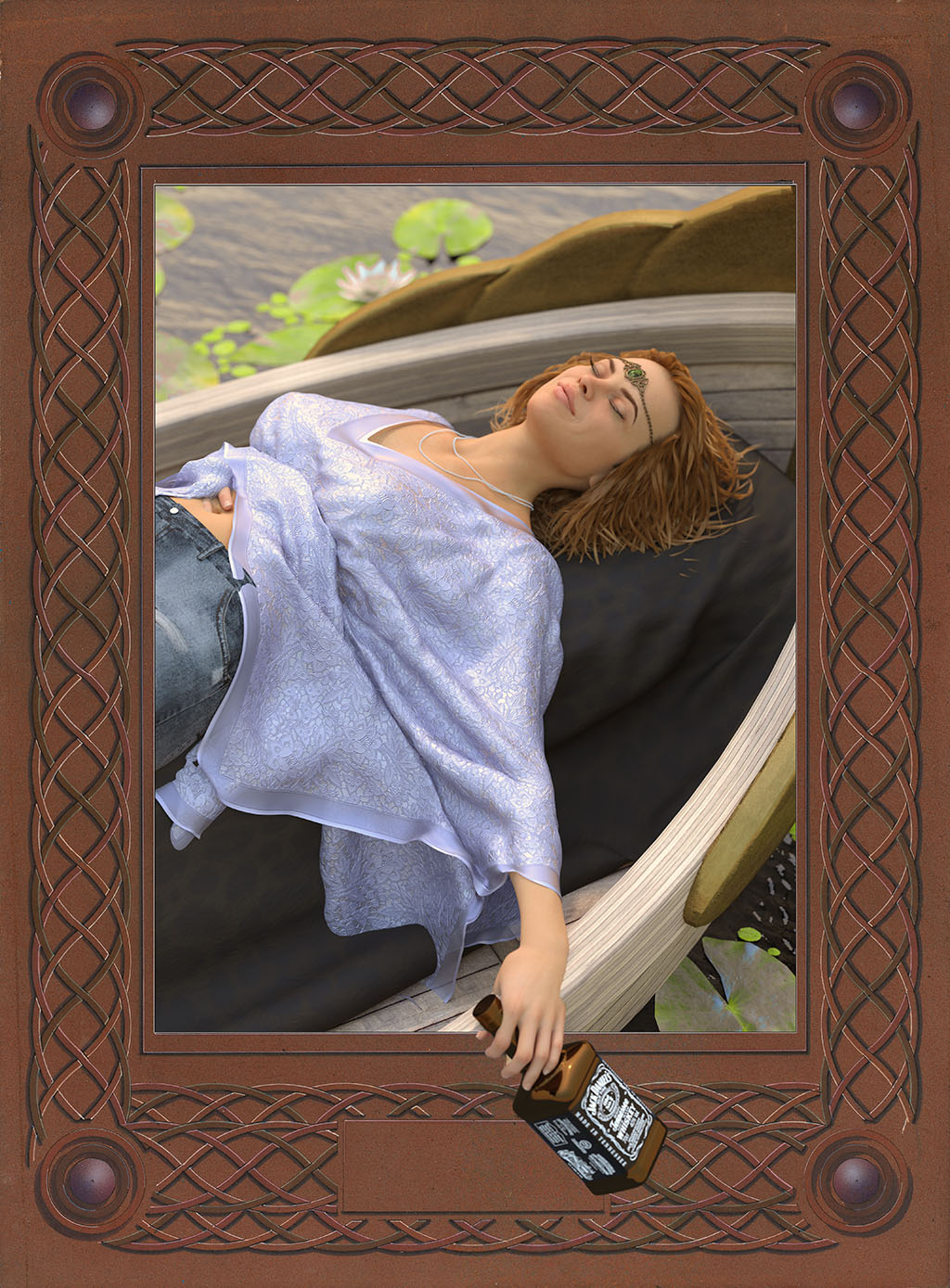
And then she called her father, Sir Bernard, and her brother, Sir Tirre, and heartily she prayed her father that her brother might write a letter like as she did indite it: and so her father granted her. And when the letter was written word by word like as she devised, then she prayed her father that she might be watched until she were dead. And while my body is hot let this letter be put in my right hand, and my hand bound fast with the letter until that I be cold; and let me be put in a fair bed with all the richest clothes that I have about me, and so let my bed and all my richest clothes be laid with me in a chariot unto the next place where Thames is; and there let me be put within a barget, and but one man with me, such as ye trust to steer me thither, and that my barget be covered with black samite over and over: thus father I beseech you let it be done. So her father granted it her faithfully, all things should be done like as she had devised. Then her father and her brother made great dole, for when this was done anon she died. And so when she was dead the corpse and the bed all was led the next way unto Thames, and there a man, and the corpse, and all, were put into Thames; and so the man steered the barget unto Westminster, and there he rowed a great while to and fro or any espied it.
CHAPTER XX
How the corpse of the Maid of Astolat arrived to-fore King Arthur, and of the burying, and how Sir Launcelot offered the mass-penny.
SO by fortune King Arthur and the Queen Guenever were speaking together at a window, and so as they looked into Thames they espied this black barget, and had marvel what it meant. Then the king called Sir Kay, and showed it him. Sir, said Sir Kay, wit you well there is some new tidings. Go thither, said the king to Sir Kay, and take with you Sir Brandiles and Agravaine, and bring me ready word what is there. Then these four knights departed and came to the barget and went in; and there they found the fairest corpse lying in a rich bed, and a poor man sitting in the barget's end, and no word would he speak. So these four knights returned unto the king again, and told him what they found. That fair corpse will I see, said the king. And so then the king took the queen by the hand, and went thither.
Then the king made the barget to be holden fast, and then the king and the queen entered with certain knights with them; and there he saw the fairest woman lie in a rich bed, covered unto her middle with many rich clothes, and all was of cloth of gold, and she lay as though she had smiled. Then the queen espied a letter in her right hand, and told it to the king. Then the king took it and said: Now am I sure this letter will tell what she was, and why she is come hither. So then the king and the queen went out of the barget, and so commanded a certain man to wait upon the barget.
And so when the king was come within his chamber, he called many knights about him, and said that he would wit openly what was written within that letter. Then the king brake it, and made a clerk to read it, and this was the intent of the letter. Most noble knight, Sir Launcelot, now hath death made us two at debate for your love. I was your lover, that men called the Fair Maiden of Astolat; therefore unto all ladies I make my moan, yet pray for my soul and bury me at least, and offer ye my mass-penny: this is my last request. And a clean maiden I died, I take God to witness: pray for my soul, Sir Launcelot, as thou art peerless. This was all the substance in the letter. And when it was read, the king, the queen, and all the knights wept for pity of the doleful complaints. Then was Sir Launcelot sent for; and when he was come King Arthur made the letter to be read to him.
And when Sir Launcelot heard it word by word, he said: My lord Arthur, wit ye well I am right heavy of the death of this fair damosel: God knoweth I was never causer of her death by my willing, and that will I report me to her own brother: here he is, Sir Lavaine. I will not say nay, said Sir Launcelot, but that she was both fair and good, and much I was beholden unto her, but she loved me out of measure. Ye might have shewed her, said the queen, some bounty and gentleness that might have preserved her life. Madam, said Sir Launcelot, she would none other ways be answered but that she would be my wife, outher else my paramour; and of these two I would not grant her, but I proffered her, for her good love that she shewed me, a thousand pound yearly to her, and to her heirs, and to wed any manner knight that she could find best to love in her heart. For madam, said Sir Launcelot, I love not to be constrained to love; for love must arise of the heart, and not by no constraint. That is truth, said the king, and many knight's love is free in himself, and never will be bounden, for where he is bounden he looseth himself.
Then said the king unto Sir Launcelot: It will be your worship that ye oversee that she be interred worshipfully. Sir, said Sir Launcelot, that shall be done as I can best devise. And so many knights yede thither to behold that fair maiden. And so upon the morn she was interred richly, and Sir Launcelot offered her mass-penny; and all the knights of the Table Round that were there at that time offered with Sir Launcelot. And then the poor man went again with the barget. Then the queen sent for Sir Launcelot, and prayed him of mercy, for why that she had been wroth with him causeless. This is not the first time, said Sir Launcelot, that ye had been displeased with me causeless, but, madam, ever I must suffer you, but what sorrow I endure I take no force. So this passed on all that winter, with all manner of hunting and hawking, and jousts and tourneys were many betwixt many great lords, and ever in all places Sir Lavaine gat great worship, so that he was nobly renowned among many knights of the Table Round.
CHAPTER XXI
Of great jousts done all a Christmas, and of a great jousts and tourney ordained by King Arthur, and of Sir Launcelot.
THUS it passed on till Christmas, and then every day there was jousts made for a diamond, who that jousted best should have a diamond. But Sir Launcelot would not joust but if it were at a great jousts cried. But Sir Lavaine jousted there all that Christmas passingly well, and best was praised, for there were but few that did so well. Wherefore all manner of knights deemed that Sir Lavaine should be made knight of the Table Round at the next feast of Pentecost. So at-after Christmas King Arthur let call unto him many knights, and there they advised together to make a party and a great tournament and jousts. And the King of Northgalis said to Arthur, he would have on his party King Anguish of Ireland, and the King with the Hundred Knights, and the King of Northumberland, and Sir Galahad, the haut prince. And so these four kings and this mighty duke took part against King Arthur and the knights of the Table Round. And the cry was made that the day of the jousts should be beside Westminster upon Candlemas Day, whereof many knights were glad, and made them ready to be at that jousts in the freshest manner.
Then Queen Guenever sent for Sir Launcelot, and said thus: I warn you that ye ride no more in no jousts nor tournaments but that your kinsmen may know you. And at these jousts that shall be ye shall have of me a sleeve of gold; and I pray you for my sake enforce yourself there, that men may speak of you worship; but I charge you as ye will have my love, that ye warn your kinsmen that ye will bear that day the sleeve of gold upon your helmet. Madam, said Sir Launcelot, it shall be done. And so either made great joy of other. And when Sir Launcelot saw his time he told Sir Bors that he would depart, and have no more with him but Sir Lavaine, unto the good hermit that dwelt in that forest of Windsor; his name was Sir Brasias; and there he thought to repose him, and take all the rest that he might, because he would be fresh at that day of jousts.
So Sir Launcelot and Sir Lavaine departed, that no creature wist where he was become, but the noble men of his blood. And when he was come to the hermitage, wit ye well he had good cheer. And so daily Sir Launcelot would go to a well fast by the hermitage, and there he would lie down, and see the well spring and burble, and sometime he slept there. So at that time there was a lady dwelt in that forest, and she was a great huntress, and daily she used to hunt, and ever she bare her bow with her; and no men went never with her, but always women, and they were shooters, and could well kill a deer, both at the stalk and at the trest; and they daily bare bows and arrows, horns and wood-knives, and many good dogs they had, both for the string and for a bait. So it happed this lady the huntress had abated her dog for the bow at a barren hind, and so this barren hind took the flight over hedges and woods. And ever this lady and part of her women costed the hind, and checked it by the noise of the hounds, to have met with the hind at some water; and so it happed, the hind came to the well whereas Sir Launcelot was sleeping and slumbering. And so when the hind came to the well, for heat she went to soil, and there she lay a great while; and the dog came after, and umbecast about, for she had lost the very perfect feute of the hind. Right so came that lady the huntress, that knew by the dog that she had, that the hind was at the soil in that well; and there she came stiffly and found the hind, and she put a broad arrow in her bow, and shot at the hind, and over-shot the hind; and so by misfortune the arrow smote Sir Launcelot in the thick of the buttock, over the barbs. When Sir Launcelot felt himself so hurt, he hurled up woodly, and saw the lady that had smitten him. And when he saw she was a woman, he said thus: Lady or damosel, what that thou be, in an evil time bear ye a bow; the devil made you a shooter.
CHAPTER XXII
How Launcelot after that he was hurt of a gentlewoman came to an hermit, and of other matters.
NOW mercy, fair sir, said the lady, I am a gentlewoman that useth here in this forest hunting, and God knoweth I saw ye not; but as here was a barren hind at the soil in this well, and I weened to have done well, but my hand swerved. Alas, said Sir Launcelot, ye have mischieved me. And so the lady departed, and Sir Launcelot as he might pulled out the arrow, and left that head still in his buttock, and so he went weakly to the hermitage ever more bleeding as he went. And when Sir Lavaine and the hermit espied that Sir Launcelot was hurt, wit you well they were passing heavy, but Sir Lavaine wist not how that he was hurt nor by whom. And then were they wroth out of measure.
Then with great pain the hermit gat out the arrow's head out of Sir Launcelot's buttock, and much of his blood he shed, and the wound was passing sore, and unhappily smitten, for it was in such a place that he might not sit in no saddle. Have mercy, Jesu, said Sir Launcelot, I may call myself the most unhappiest man that liveth, for ever when I would fainest have worship there befalleth me ever some unhappy thing. Now so Jesu me help, said Sir Launcelot, and if no man would but God, I shall be in the field upon Candlemas Day at the jousts, whatsomever fall of it: so all that might be gotten to heal Sir Launcelotwas had.
So when the day was come Sir Launcelot let devise that he was arrayed, and Sir Lavaine, and their horses, as though they had been Saracens; and so they departed and came nigh to the field. The King of Northgalis with an hundred knights with him, and the King of Northumberland brought with him an hundred good knights, and King Anguish of Ireland brought with him an hundred good knights ready to joust, and Sir Galahad, the haut prince, brought with him an hundred good knights, and the King with the Hundred Knights brought with him as many, and all these were proved good knights. Then came in King Arthur's party; and there came in the King of Scots with an hundred knights, and King Uriens of Gore brought with him an hundred knights, and King Howel of Brittany brought with him an hundred knights, and Chaleins of Clarance brought with him an hundred knights, and King Arthur himself came into the field with two hundred knights, and the most part were knights of the Table Round, that were proved noble knights; and there were old knights set in scaffolds for to judge, with the queen, who did best.
CHAPTER XXIII
How Sir Launcelot behaved him at the jousts, and other men also.
THEN they blew to the field; and there the King of Northgalis encountered with the King of Scots, and there the King of Scots had a fall; and the King of Ireland smote down King Uriens; and the King of Northumberland smote down King Howel of Brittany; and Sir Galahad, the haut prince, smote down Chaleins of Clarance. And then King Arthur was wood wroth, and ran to the King with the Hundred Knights, and there King Arthur smote him down; and after with that same spear King Arthur smote down three other knights. And then when his spear was broken King Arthur did passingly well; and so therewithal came in Sir Gawaine and Sir Gaheris, Sir Agravaine and Sir Mordred, and there everych of them smote down a knight, and Sir Gawaine smote down four knights; and then there began a strong medley, for then there came in the knights of Launcelot's blood, and Sir Gareth and Sir Palomides with them, and many knights of the Table Round, and they began to hold the four kings and the mighty duke so hard that they were discomfit; but this Duke Galahad, the haut prince, was a noble knight, and by his mighty prowess of arms he held the knights of the Table Round strait enough.
All this doing saw Sir Launcelot, and then he came into the field with Sir Lavaine as it had been thunder. And then anon Sir Bors and the knights of his blood espied Sir Launcelot, and said to them all: I warn you beware of him with the sleeve of gold upon his head, for he is himself Sir Launcelot du Lake; and for great goodness Sir Bors warned Sir Gareth. I am well apaid, said Sir Gareth, that I may know him. But who is he, said they all, that rideth with him in the same array? That is the good and gentle knight Sir Lavaine, said Sir Bors. So Sir Launcelot encountered with Sir Gawaine, and there by force Sir Launcelot smote down Sir Gawaine and his horse to the earth, and so he smote down Sir Agravaine and Sir Gaheris, and also he smote down Sir Mordred, and all this was with one spear. Then Sir Lavaine met with Sir Palomides, and either met other so hard and so fiercely that both their horses fell to the earth. And then were they horsed again, and then met Sir Launcelot with Sir Palomides, and there Sir Palomides had a fall; and so Sir Launcelot or ever he stint, as fast as he might get spears, he smote down thirty knights, and the most part of them were knights of the Table Round; and ever the knights of his blood withdrew them, and made them ado in other places where Sir Launcelot came not.
And then King Arthur was wroth when he saw Sir Launcelot do such deeds; and then the king called unto him Sir Gawaine, Sir Mordred, Sir Kay, Sir Griflet, Sir Lucan the Butler, Sir Bedivere, Sir Palomides, Sir Safere, his brother; and so the king with these nine knights made them ready to set upon Sir Launcelot, and upon Sir Lavaine. All this espied Sir Bors and Sir Gareth. Now I dread me sore, said Sir Bors, that my lord, Sir Launcelot, will be hard matched. By my head, said Sir Gareth, I will ride unto my lord Sir Launcelot, for to help him, fall of him what fall may, for he is the same man that made me knight. Ye shall not so, said Sir Bors, by my counsel, unless that ye were disguised. Ye shall see me disguised, said Sir Gareth; and therewithal he espied a Welsh knight where he was to repose him, and he was sore hurt afore by Sir Gawaine, and to him Sir Gareth rode, and prayed him of his knighthood to lend him his shield for his. I will well, said the Welsh knight. And when Sir Gareth had his shield, the book saith it was green, with a maiden that seemed in it.
Then Sir Gareth came driving to Sir Launcelot all that he might and said: Knight, keep thyself, for yonder cometh King Arthur with nine noble knights with him to put you to a rebuke, and so I am come to bear you fellowship for old love ye have shewed me. Gramercy, said Sir Launcelot. Sir, said Sir Gareth, encounter ye with Sir Gawaine, and I shall encounter with Sir Palomides; and let Sir Lavaine match with the noble King Arthur. And when we have delivered them, let us three hold us sadly together. Then came King Arthur with his nine knights with him, and Sir Launcelot encountered with Sir Gawaine, and gave him such a buffet that the arson of his saddle brast, and Sir Gawaine fell to the earth. Then Sir Gareth encountered with the good knight Sir Palomides, and he gave him such a buffet that both his horse and he dashed to the earth. Then encountered King Arthur with Sir Lavaine, and there either of them smote other to the earth, horse and all, that they lay a great while. Then Sir Launcelot smote down Sir Agravaine, and Sir Gaheris, and Sir Mordred; and Sir Gareth smote down Sir Kay, and Sir Safere, and Sir Griflet. And then Sir Lavaine was horsed again, and he smote down Sir Lucan the Butler and Sir Bedevere and then there began great throng of good knights.
Then Sir Launcelot hurtled here and there, and raced and pulled off helms, so that at that time there might none sit him a buffet with spear nor with sword; and Sir Gareth did such deeds of arms that all men marvelled what knight he was with the green shield, for he smote down that day and pulled down mo than thirty knights And, as the French book saith, Sir Launcelot marvelled; when he beheld Sir Gareth do such deeds, what knight he might be; and Sir Lavaine pulled down and smote down twenty knights. Also Sir Launcelot knew not Sir Gareth for an Sir Tristram de Liones, outher Sir Lamorak de Galis had been alive, Sir Launcelot would have deemed he had been one of them twain. So ever as Sir Launcelot Sir Gareth, Sir Lavaine fought, and on the one side Sir Bors, Sir Ector de Maris, Sir Lionel, Sir Lamorak de Galis, Sir Bleoberis, Sir Galihud, Sir Galihodin, Sir Pelleas, and with mo other of King Ban's blood fought upon another party, and held the King with the Hundred Knights and the King of Northumberland right strait.
CHAPTER XXIV
How King Arthur marvelled much of the jousting in the field, and how he rode and found Sir Launcelot.
SO this tournament and this jousts dured long, till it was near night, for the knights of the Round Table relieved ever unto King Arthur; for the king was wroth out of measure that he and his knights might not prevail that day. Then Sir Gawaine said to the king: I marvel where all this day [be] Sir Bors de Ganis and his fellowship of Sir Launcelot's blood, I marvel all this day they be not about you: it is for some cause said Sir Gawaine. By my head, said Sir Kay, Sir Bors is yonder all this day upon the right hand of this field, and there he and his blood do more worshipfully than we do. It may well be, said Sir Gawaine, but I dread me ever of guile; for on pain of my life, said Sir Gawaine, this knight with the red sleeve of gold is himself Sir Launcelot, I see well by his riding and by his great strokes; and the other knight in the same colours is the good young knight, Sir Lavaine. Also that knight with the green shield is my brother, Sir Gareth, and yet he hath disguised himself, for no man shall never make him be against Sir Launcelot, because he made him knight. By my head, said Arthur, nephew, I believe you; therefore tell me now what is your best counsel. Sir, said Sir Gawaine, ye shall have my counsel: let blow unto lodging, for an he be Sir Launcelot du Lake, and my brother, Sir Gareth, with him, with the help of that good young knight, Sir Lavaine, trust me truly it will be no boot to strive with them but if we should fall ten or twelve upon one knight, and that were no worship, but shame. Ye say truth, said the king; and for to say sooth, said the king, it were shame to us so many as we be to set upon them any more; for wit ye well, said King Arthur, they be three good knights, and namely that knight with the sleeve of gold.
So then they blew unto lodging; but forthwithal King Arthur let send unto the four kings, and to the mighty duke, and prayed them that the knight with the sleeve of gold depart not from them, but that the king may speak with him. Then forthwithal King Arthur alighted and unarmed him, and took a little hackney and rode after Sir Launcelot, for ever he had a spy upon him. And so he found him among the four kings and the duke; and there the king prayed them all unto supper, and they said they would with good will. And when they were unarmed then King Arthur knew Sir Launcelot, Sir Lavaine, and Sir Gareth. Ah, Sir Launcelot, said King Arthur, this day ye have heated me and my knights.
So they yede unto Arthur's lodging all together, and there was a great feast and great revel, and the prize was given unto Sir Launcelot; and by heralds they named him that he had smitten down fifty knights, and Sir Gareth five-and-thirty, and Sir Lavaine four-and-twenty knights. Then Sir Launcelot told the king and the queen how the lady huntress shot him in the forest of Windsor, in the buttock, with an broad arrow, and how the wound thereof was that time six inches deep, and in like long. Also Arthur blamed Sir Gareth because he left his fellowship and held with Sir Launcelot. My lord, said Sir Gareth, he made me a knight, and when I saw him so hard bestead, methought it was my worship to help him, for I saw him do so much, and so many noble knights against him; and when I understood that he was Sir Launcelot du Lake, I shamed to see so many knights against him alone. Truly, said King Arthur unto Sir Gareth, ye say well, and worshipfully have ye done and to yourself great worship; and all the days of my life, said King Arthur unto Sir Gareth, wit you well I shall love you, and trust you the more better. For ever, said Arthur, it is a worshipful knight's deed to help another worshipful knight when he seeth him in a great danger; for ever a worshipful man will be loath to see a worshipful man shamed; and he that is of no worship, and fareth with cowardice, never shall he show gentleness, nor no manner of goodness where he seeth a man in any danger, for then ever will a coward show no mercy; and always a good man will do ever to another man as he would be done to himself. So then there were great feasts unto kings and dukes, and revel, game, and play, and all manner of noblesse was used; and he that was courteous, true, and faithful, to his friend was that time cherished.
CHAPTER XXV
How true love is likened to summer.
AND thus it passed on from Candlemass until after Easter, that the month of May was come, when every lusty heart beginneth to blossom, and to bring forth fruit; for like as herbs and trees bring forth fruit and flourish in May, in like wise every lusty heart that is in any manner a lover, springeth and flourisheth in lusty deeds. For it giveth unto all lovers courage, that lusty month of May, in something to constrain him to some manner of thing more in that month than in any other month, for divers causes. For then all herbs and trees renew a man and woman, and likewise lovers call again to their mind old gentleness and old service, and many kind deeds that were forgotten by negligence. For like as winter rasure doth alway arase and deface green summer, so fareth it by unstable love in man and woman. For in many persons there is no stability; for we may see all day, for a little blast of winter's rasure, anon we shall deface and lay apart true love for little or nought, that cost much thing; this is no wisdom nor stability, but it is feebleness of nature and great disworship, whosomever useth this. Therefore, like as May month flowereth and flourisheth in many gardens, so in like wise let every man of worship flourish his heart in this world, first unto God, and next unto the joy of them that he promised his faith unto; for there was never worshipful man or worshipful woman, but they loved one better than another; and worship in arms may never be foiled, but first reserve the honour to God, and secondly the quarrel must come of thy lady: and such love I call virtuous love.
But nowadays men can not love seven night but they must have all their desires: that love may not endure by reason; for where they be soon accorded and hasty heat, soon it cooleth. Right so fareth love nowadays, soon hot soon cold: this is no stability. But the old love was not so; men and women could love together seven years, and no licours lusts were between them, and then was love, truth, and faithfulness: and lo, in like wise was used love in King Arthur's days. Wherefore I liken love nowadays unto summer and winter; for like as the one is hot and the other cold, so fareth love nowadays; therefore all ye that be lovers call unto your remembrance the month of May, like as did Queen Guenever, for whom I make here a little mention, that while she lived she was a true lover, and therefore she had a good end.
Free Tarot Readings by Alison Day
Mystic Realms has linked up with Lotus Tarot, probably the best Tarot Reading site on the internet today.